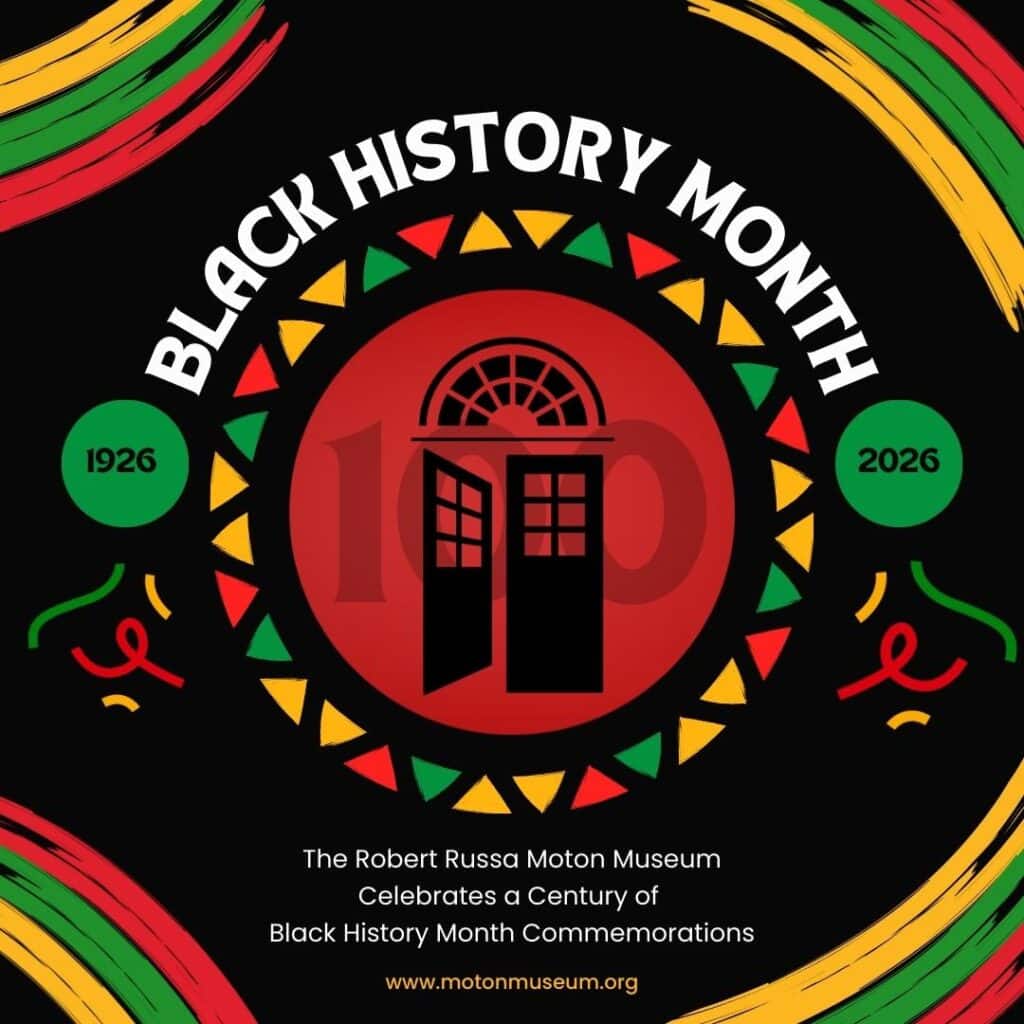
Black History Month was never meant to be rushed—or confined to a single day on the calendar. It is an invitation to learn, reflect, and engage with a history that is central to the American story.
How Black History Month Began
In 2026, we recognize 100 years of Black History commemoration, a milestone that traces back to 1926 when Dr. Carter G. Woodson, widely known as the Father of Black History Month, established Negro History Week. A Virginia-born historian and educator, Dr. Woodson also established the Association for the Study of African American Life and History (ASALH) to address what was missing from American education—the absence of Black life, intellect, and achievement from the historical record.
For fifty years, from 1926 to 1975, Negro History Week created space for scholarship, teaching, and public learning. In 1976, that observance expanded into Black History Month, extending Dr. Woodson’s vision for another fifty years and bringing Black history more fully into classrooms, communities, and public life. Together, these two periods form a century-long commitment to truth, education, and understanding.
Black History Lives at Moton
At the Robert Russa Moton Museum, that commitment lives in place.
Located in Farmville, Virginia, the museum stands on the original site of the 1951 student-led strike, where 16 year old Barbara Rose Johns and her fellow students challenged unequal educational conditions. Their courage helped set in motion the legal fight that became Brown v. Board of Education, reshaping public education across the nation.
Visitors can explore how this local act of student leadership connects to national history—learning about educators like Dorothy Vaughan, who taught mathematics at R.R. Moton High School before her groundbreaking work at NASA; hearing oral histories from students who were there during the strike and the five-year school closings from 1959 to 1964; and engaging with the museum’s telling of Massive Resistance, the legal struggle led by the NAACP, and the stories of survivorship and hope that define Moton’s legacy.
Exploring Black History Beyond the Museum
Black History Month is also a time to step beyond museum walls and engage with history in the community. Farmville is home to a Civil Rights Walking Tour, and the Robert Russa Moton Museum is a featured site on the U.S. Civil Rights Trail, connecting visitors to stories of resistance, resilience, and civic action across the nation. For those exploring from afar, listeners can also engage with Moton’s story through the new Virginia Civil Rights Podcast, which highlights sites, voices, and moments that shaped the Commonwealth’s role in the broader civil rights movement.
As Virginia prepares for VA250, the 250th anniversary of the nation, visitors participating in the VA250 Passport program can get their stamp and reflect on how Black history is inseparable from America’s democratic journey. A visit to the Barbara Rose Johns statue—now representing the Commonwealth of Virginia alongside George Washington in the U.S. Capitol—offers another powerful opportunity to consider whose stories shape our shared history.
An Invitation
Throughout Black History Month, we invite you to make Moton part of your celebration:
- visit the museum
- attend programs happening in and outside of our walls
- explore local civil rights sites
- spend time in our newly opened retail space and the Moton Library and Lounge, designed for learning, reflection, and community gathering.
Black History Month was never intended to be symbolic. As Dr. Woodson believed, it exists to correct the record, deepen understanding, and affirm the importance of truth in education. At Moton, that work continues—rooted in place, guided by scholarship, and carried forward by the community.
Whether this is your first visit or your return, we welcome you to learn, reflect, and commemorate Black history where it changed the course of the nation.